
Hygge’s power against Seasonal Affective Disorder isn’t in buying more blankets, but in mastering sensory regulation.
- Warm, low-level lighting biochemically reduces evening stress hormones like cortisol.
- Layering textiles and managing humidity creates a “thermal cocoon” that increases perceived warmth.
Recommendation: Focus on curating specific environmental cues—light, texture, and scent—to actively create a restorative space for your nervous system.
As the days shorten and a persistent chill settles in, many of us feel a familiar dip in energy and mood. This is more than just the “winter blues”; for millions, it’s a recurring pattern known as Seasonal Affective Disorder (SAD). It’s a real, biological response to the lack of natural light. In response, the concept of “hygge”—the Danish art of coziness—has become a popular prescription. We’re told to light candles, buy plush throws, and sip warm drinks. While these actions are pleasant, they often miss the point, treating hygge as a simple decorative style rather than the powerful psychological tool it truly is.
The common advice reduces a profound practice to a consumerist checklist. But what if the true antidote to SAD isn’t found in what you buy, but in how you consciously shape your environment? The real power of hygge lies in its ability to facilitate sensory regulation. It’s about understanding how specific environmental cues—the quality of light, the feel of a texture, the ambient humidity—directly influence your neurobiology. This isn’t about creating a pretty room; it’s about crafting a psychologically restorative environment that actively works to rebalance your internal systems, from stress hormones to your capacity for genuine rest. This guide will explore the science-backed principles of hygge, transforming your home from a passive shelter into an active sanctuary against the winter.
In this article, we will deconstruct the core components of a truly effective hygge environment. We’ll explore the science of light, the psychology of texture, and the practical steps to create a home that not only looks cozy but actively supports your mental well-being throughout the darkest months of the year.
Summary: A Neuro-Sensory Approach to Hygge for Winter Wellness
- Why Harsh Overhead Lighting Increases Cortisol Levels in the Evening
- How to Layer Textiles to Increase Thermal Perception by 3 Degrees
- Minimalism vs. Hygge: Which Style Reduces Anxiety More Effectively?
- The Decoration Mistake That Turns “Cozy” into “Cluttered” and Stressful
- Transitioning Your Home Decor: A Timeline for Welcoming Autumn
- Why 21°C Feels Cold in Winter if Your Indoor Humidity Is Below 30%
- Why the Default Mode Network Prevents You from Truly Resting Even When Sitting Still
- Achieving Professional Curb Appeal DIY Through Interior Light Pathways
Why Harsh Overhead Lighting Increases Cortisol Levels in the Evening
That jarring feeling you get from a bright, central ceiling light in the evening is more than just an aesthetic annoyance; it’s a biological alarm bell. Our bodies are finely tuned to the natural cycles of light and dark. For millennia, bright, blue-toned light meant “daytime”—a signal for alertness, activity, and the production of cortisol, the body’s primary stress hormone. Harsh, overhead indoor lighting, especially from modern cool-white LEDs, mimics this daytime signal at precisely the time our bodies should be winding down. This mismatch sends a confusing message to our brain, disrupting our natural circadian rhythm.
The science is clear on this. The light-sensitive cells in our retinas (ipRGCs) are most responsive to short-wavelength blue light. When these cells are stimulated in the evening, they suppress the production of melatonin (the sleep hormone) and can trigger the release of cortisol. In fact, research from 2020 demonstrates that blue light exposure at night significantly increased cortisol levels compared to exposure to warmer, red-toned light. For someone grappling with SAD, whose system is already dysregulated, this evening cortisol spike can exacerbate feelings of anxiety, restlessness, and insomnia, preventing the deep, restorative sleep needed for mental resilience.
A core tenet of hygge is to replace this biological stressor with a soothing signal. By switching off the “big light” and using multiple, low-level lamps with warm-toned bulbs (around 2700K), you are not just creating a cozy ambiance. You are engaging in a form of light therapy, telling your nervous system that the day is over, it is safe to relax, and it’s time to begin the crucial processes of rest and repair. This simple act is a foundational step in turning your home into a truly restorative environment.
How to Layer Textiles to Increase Thermal Perception by 3 Degrees
The sensation of cold is not just about the number on the thermostat; it’s a complex perception influenced by humidity, air movement, and critically, the surfaces we touch. A leather sofa might feel cold and unwelcoming in winter, while a wool blanket feels instantly comforting. Hygge masterfully leverages this principle of haptic comfort through the strategic layering of textiles. This isn’t just about piling on blankets; it’s about creating a “thermal cocoon” that changes how your body perceives the temperature of the room.
The goal is to interrupt the feeling of cold at every point of contact. This is where the “5-Layer Hygge Formula” comes into play, a method that can create a perceived warmth increase of several degrees. As demonstrated in a case study of a Seattle apartment transformation, this multi-layer approach involves:
- Floors: Start with plush rugs to insulate from cold flooring.
- Furniture: Drape throws over sofas and chairs to make seating surfaces instantly warm to the touch.
- Cushions: Add a variety of textured cushions (wool, velvet, faux fur) for back and neck support.
- Accents: Introduce highly tactile elements like sheepskin accents on a bench or the floor.
- Personal Layers: The final layer is for you—cozy socks, a soft robe, or a personal lap blanket.
This multi-sensory layering creates an environment of encompassing warmth that goes far beyond the actual air temperature. The residents of the Seattle apartment reported a perceived warmth increase of approximately 3 degrees without ever touching the thermostat. By surrounding yourself with soft, insulating materials, you send a constant stream of “safe and warm” signals to your nervous system, directly counteracting the bleak, cold feeling that often accompanies winter and deepens the impact of SAD.
Minimalism vs. Hygge: Which Style Reduces Anxiety More Effectively?
In the quest for a calming home, two philosophies often seem at odds: the sparse, clean-lined world of minimalism and the soft, abundant comfort of hygge. For those prone to anxiety, the choice can be paralyzing. Minimalism promises peace through the absence of clutter, a “less is more” approach that can certainly reduce overstimulation. As one person aptly noted in a discussion on the topic, “My anxiety is so much better when things are clean and organized.” This highlights a valid psychological need for order and visual clarity.
However, strict minimalism can sometimes veer into sterility. A space devoid of personal objects, soft textures, and warm lighting can feel cold, empty, and unwelcoming—emotions that do little to soothe an anxious mind during a bleak winter. Hygge, on the other hand, embraces an abundance of comforting items. Yet, taken too far, this can quickly devolve into its own form of stress: clutter. The very coziness it aims for becomes a source of visual chaos and mental burden. The truth is, for effectively reducing anxiety, neither extreme is optimal. The most psychologically restorative approach is a synthesis of the two: curated hygge or warm minimalism.
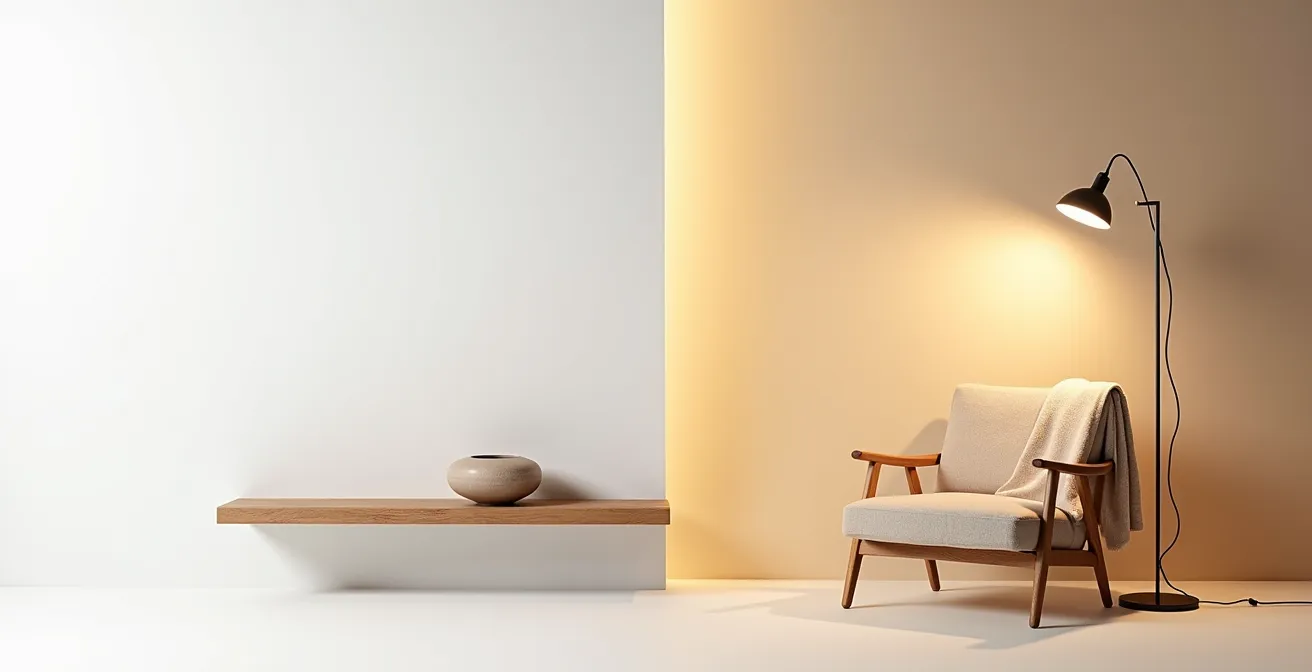
This balanced style adopts the minimalist principle of “own only what is useful or beautiful” but applies a hygge filter, prioritizing items that also provide sensory comfort and emotional resonance. It’s about maintaining clear surfaces and open space while intentionally introducing key comfort elements. For instance, instead of ten mediocre cushions, you choose two made of exceptionally soft wool. You keep floors clear but anchor the space with one high-quality, plush rug. To enhance the feeling of openness, design professionals confirm that furniture under 18 inches high increases perceived vertical space by 15-20%, creating an airy feel without sacrificing comfort. This intentional blend gives you the order that calms anxiety and the sensory warmth that fights the chill of SAD.
The Decoration Mistake That Turns “Cozy” into “Cluttered” and Stressful
The most common pitfall in pursuing a hygge lifestyle is the misunderstanding between abundance and accumulation. In an effort to create a cozy sanctuary, it’s easy to cross the fine line from “comfortably full” to “stressfully cluttered.” A pile of blankets, a sea of cushions, and shelves overflowing with candles and trinkets can quickly become a source of visual noise. This environment, instead of soothing the nervous system, overloads it. The brain has to process every single object, creating a low-level but constant state of cognitive strain that undermines the very goal of hygge.
True hygge is not about having more things; it’s about the intentional curation of the right things. It’s an organized, mindful approach to comfort. As demonstrated by design studios in Brooklyn, it’s possible to achieve maximum sensory impact with minimal visual clutter, even in small spaces. They accomplish this by ensuring every cozy item has a purpose and a place. The key is to treat your comfort items with the same organizational respect you’d give to your kitchen tools or office supplies. This prevents the “cozy creep” where comfort items slowly take over every surface.
To achieve this balance, you need a system. The “Container Method” is a highly effective way to enjoy the richness of hygge without the stress of clutter. It’s a simple set of rules for managing your collection of comforting objects, ensuring your space remains a serene and restorative haven.
Action Plan: The Container Method for Hygge Without Clutter
- Assign Homes: Give every hygge item a designated storage place. A woven basket becomes the dedicated ‘home’ for blankets, while a wooden chest can hold extra cushions when not in use.
- Apply the ‘One-In, One-Out’ Rule: When you bring a new cozy item into your home, an old one must leave. This prevents gradual accumulation.
- Choose Quality Over Quantity: Invest in two or three exceptional pieces—like a high-quality cashmere throw or a perfectly crafted ceramic mug—rather than a dozen mediocre ones.
- Create ‘Hygge Zones’: Instead of scattering comfort items throughout a room, designate specific areas for them, such as a reading nook or a corner of the sofa. This contains the coziness.
- Conduct Seasonal Edits: At the beginning of each season, review your hygge items. Store, donate, or discard anything that no longer serves a purpose or sparks joy.
Transitioning Your Home Decor: A Timeline for Welcoming Autumn
The best way to combat Seasonal Affective Disorder is to be proactive. Instead of waiting for the depths of winter to make changes, you can begin transitioning your home’s sensory environment in early autumn. This gradual shift allows your mind and body to ease into the new season, building a foundation of comfort before the cold and darkness fully set in. A structured, week-by-week approach focused on different sensory systems can make this transition feel intentional and enjoyable, rather than a desperate reaction to falling moods.
This 4-week timeline is designed to layer sensory cues, creating a rich, multi-faceted hygge environment. Each week builds upon the last, culminating in a complete sanctuary that feels like a warm, protective embrace against the coming winter. The focus is on introducing changes that have a direct and positive psychological impact, from triggering comforting memories with scent to biochemically preparing your body for better sleep with warm light.

By following this sensory timeline, you are not just redecorating; you are engaging in a mindful ritual that acknowledges the changing season and fortifies your home—and your mind—for the challenges ahead. This proactive approach is a cornerstone of using hygge as a genuine tool for mental wellness.
| Week | Sensory System | Actions | Psychological Impact |
|---|---|---|---|
| Week 1 | Olfactory | Introduce cedar, clove, or vanilla scents via candles or essential oils. | Triggers comfort memories, reduces stress. |
| Week 2 | Tactile | Swap light linens for wool throws and add textured cushions. | Increases haptic comfort, provides a grounding effect. |
| Week 3 | Visual | Replace bulbs with 2700K warm lights and position lamps below eye level. | Reduces evening cortisol, improves sleep preparation. |
| Week 4 | Gustatory/Auditory | Stock warming teas and create a calming playlist with nature sounds. | Completes the multi-sensory comfort environment. |
Why 21°C Feels Cold in Winter if Your Indoor Humidity Is Below 30%
Have you ever noticed that even when your thermostat is set to a comfortable 21°C (70°F), you still feel a persistent chill in the winter? This isn’t just in your head; it’s a matter of physics and physiology. The culprit is low indoor humidity. Winter air is naturally dry, and our central heating systems bake even more moisture out of it. When your indoor humidity drops below 30%, the dry air acts like a thirsty sponge, pulling moisture directly from your skin.
This process of evaporation has a powerful cooling effect. Just as sweat cools you down in the summer, the rapid evaporation of moisture from your skin in a dry winter environment makes you feel significantly colder than the actual air temperature. Your body is losing heat faster, forcing your internal systems to work harder to stay warm and contributing to a feeling of physical stress and discomfort. This is why building science standards indicate a healthy indoor humidity level should be maintained between 30% and 60%.
For optimal thermal comfort, aiming for a range of 40-50% humidity is ideal. Maintaining this level does more than just make the room feel warmer; it allows you to potentially lower your thermostat by a few degrees while feeling just as comfortable, saving energy. More importantly for well-being, proper humidity supports respiratory health by keeping mucous membranes moist, which can reduce the survival of airborne viruses and alleviate the dry skin, scratchy throats, and irritated eyes common in winter. Using a simple humidifier is a powerful hygge practice that addresses an invisible but critical component of your sensory environment, contributing directly to both physical comfort and overall health.
Why the Default Mode Network Prevents You from Truly Resting Even When Sitting Still
We’ve all been there: you finally sit down to relax after a long day, but your mind refuses to switch off. It replays conversations, worries about the future, and generates an endless to-do list. This restless mind-chatter is the work of a specific brain circuit known as the Default Mode Network (DMN). The DMN is the brain’s “idle” state; it becomes active when we are not focused on a specific external task. While it’s useful for self-reflection and planning, an overactive DMN is also linked to rumination, anxiety, and the cognitive symptoms of depression.
This is why simply “doing nothing” is often not restful. This “empty rest” gives an overactive DMN free rein to generate stress. To achieve true “restorative rest,” the brain needs a gentle, external anchor—something to focus on that is pleasant and low-effort. This is where the genius of hygge’s sensory practices comes in. As described in a synthesis of research on hygge’s impact, sitting in a cozy corner and focusing lightly on the feeling of a warm mug in your hands, the flicker of a candle, or the softness of a blanket provides a mindful anchor that quiets the DMN.
This practice doesn’t require the intense concentration of formal meditation, making it highly accessible. It simply gives the DMN just enough to do to prevent it from spiraling into worry. A case study of Danish winter wellness practices highlights how this is embedded in their culture. Rituals like “blanket cocooning” while focusing on tactile sensations exemplify restorative rest. They disengage the brain from rumination without demanding strenuous mental effort. By creating a hygge environment, you are building a toolkit of gentle sensory anchors that can be used at any moment to quiet your mind and allow your nervous system to finally enter a state of deep, healing rest.
Key Takeaways
- Hygge is an active practice of sensory regulation, not a passive decorating style.
- Warm, low-level lighting is crucial for reducing evening cortisol and supporting healthy sleep cycles.
- True comfort comes from a balance of minimalist principles (less clutter) and hygge elements (curated textures and warmth).
Achieving Professional Curb Appeal DIY Through Interior Light Pathways
While “curb appeal” typically refers to a home’s exterior, the same principle can be applied internally to create psychological “pathways” that guide your mood and energy. The most powerful tool for this is light. Instead of relying on a single, harsh overhead source, a professionally-minded approach involves layering different types of light to create zones, focal points, and a clear transition from the bright, active areas of your home to the calm, restful ones. This is a DIY project in sensory design that has a profound impact on well-being.
The strategy involves using three layers of light. First is ambient light: a soft, general glow, often achieved by bouncing light off ceilings from an upward-facing floor lamp. This replaces the harshness of a central fixture. Second is task light: focused light for activities like reading, provided by a dedicated reading lamp. This creates an inviting “pool” of light that draws you in. Third, and most artfully, is accent light: small spotlights used to highlight a textured wall, a piece of art, or a particularly cozy chair. This creates visual interest and establishes focal points for relaxation.
By combining these layers, you can create “light pathways.” Low-level, warm lights placed along a hallway can guide the journey from a bright home office to a dimly lit, serene bedroom. This isn’t just about illumination; it’s a psychological cue that helps you shed the stress of the day as you move through your home. Installing dimmer switches is the final, crucial step. Dimmers allow you to create a gradual descent into evening calm, mirroring the setting sun and signaling to your brain that it’s time to wind down. As research confirms, people perceive warmer, dimmer lights (around 2700K) as more relaxing. Mastering your home’s lighting is the ultimate hygge practice, turning a simple space into a dynamic environment that actively supports your journey towards rest.
Frequently Asked Questions About Hygge and Thermal Comfort
Why does low humidity make me feel colder?
Dry air acts like a sponge, pulling moisture from your skin at a faster rate. This evaporation creates a cooling effect, making you feel chilled even at comfortable room temperatures.
Can a humidifier really make my room feel warmer?
Yes, maintaining 40-50% humidity can make the air feel several degrees warmer, allowing you to lower your thermostat and save energy while maintaining comfort.
What are the health benefits beyond temperature perception?
Proper humidity supports respiratory health, reduces airborne virus survival, and prevents dry skin and mucous membranes, contributing to overall winter wellness.