Culture & Arts
Culture and arts represent far more than entertainment or decoration—they form the foundation of how humans communicate, preserve knowledge, and build shared meaning across generations. From the earliest cave paintings to digital installations, creative expression has consistently served as both mirror and engine of societal transformation. The relationship between artistic practice and daily life is more interconnected than many realize, influencing everything from professional communication to technological innovation.
Understanding culture and arts requires looking beyond museums and concert halls to recognize how creative disciplines shape cognitive abilities, social structures, and technological progress. This exploration examines how artistic training enhances human capabilities, how technology democratizes creative access, and how contemporary practitioners navigate the complex challenges of maintaining cultural authenticity in an increasingly commercialized landscape.
How Artistic Practice Transforms Human Capability
Engaging with creative disciplines fundamentally alters how people perceive, process, and communicate information. The skills developed through artistic training extend well beyond the studio or stage, creating cognitive and interpersonal advantages that manifest across professional and personal contexts.
Building Presence and Awareness
The concept of presence—the ability to be fully engaged in the current moment—represents one of the most valuable skills cultivated through artistic practice. Performers, visual artists, and musicians develop heightened awareness of their physical state, environmental cues, and audience dynamics. This heightened consciousness doesn’t emerge from abstract theory but from concrete, repeated practice.
Neuroscience research has identified measurable differences in brain activity among individuals with sustained artistic training. These differences appear in areas governing attention regulation, emotional processing, and spatial awareness. A theater practitioner, for instance, develops the capacity to simultaneously monitor their vocal projection, physical positioning, fellow performers’ cues, and audience response—a form of distributed attention that transfers remarkably well to complex professional environments like negotiations, presentations, or crisis management.
Mastering Communication Through Creative Discipline
Artistic disciplines provide systematic frameworks for understanding how messages are constructed, transmitted, and received. Whether working with visual composition, musical phrasing, or dramatic tension, artists develop an intuitive grasp of rhythm, emphasis, and narrative structure that enhances all forms of communication.
Consider how visual artists learn to guide a viewer’s eye through deliberate use of contrast, line, and color. These same principles translate directly to designing presentations, organizing written arguments, or structuring physical spaces. Similarly, musicians’ understanding of dynamics—the interplay of volume, tempo, and silence—provides a sophisticated model for pacing professional conversations and controlling informational flow.
- Heightened sensitivity to nonverbal cues and body language
- Improved capacity to adjust messaging based on audience response
- Greater comfort with vulnerability and authentic self-expression
- Enhanced ability to manage emotional resonance in communication
Technical Control as Artistic Foundation
Voice control methodology exemplifies how artistic training builds extraordinary technical precision. Singers, actors, and public speakers develop conscious command over physiological processes most people never examine: breath support, resonance, articulation, and vocal cord tension. This somatic awareness transforms an automatic bodily function into a refined instrument.
The training process follows a clear progression: first, developing awareness of current habits; second, learning anatomical principles governing voice production; third, practicing isolation exercises that target specific muscles and techniques; finally, integrating these elements into expressive performance. This methodology applies equally to painters developing brush control, dancers refining movement quality, or instrumentalists achieving tonal consistency. The principle remains constant: conscious technical mastery liberates rather than constrains creative expression.
Technology as a Catalyst for Creative Democracy
Recent decades have witnessed a fundamental shift in who can create, distribute, and monetize artistic work. Digital tools have dismantled many traditional barriers—expensive equipment, gatekeeping institutions, geographic isolation—that historically restricted creative participation to those with significant financial resources or institutional access.
A smartphone now provides video recording, editing, color correction, and global distribution capabilities that would have required tens of thousands in equipment and facilities just years ago. Digital audio workstations available as free downloads offer more functionality than professional studios possessed in previous eras. Graphic design software, 3D modeling tools, and animation platforms have democratized visual creation to an unprecedented degree.
This technological democratization extends beyond individual creation to collaborative possibilities. Artists across continents now co-create in real-time, blending cultural perspectives and technical approaches that geographic separation once made impossible. Online learning platforms have made high-quality instruction from master practitioners accessible to anyone with internet connectivity, replacing the old model where serious training required relocating to specific cities or gaining acceptance to elite institutions.
However, this accessibility creates new challenges. The abundance of content makes discoverability difficult, potentially replacing old gatekeepers with algorithmic ones. The ease of creation raises questions about the value of technical mastery when filters and presets can simulate years of training. These tensions don’t negate technology’s democratizing potential but highlight the need for critical engagement with how tools shape creative practice and cultural production.
Preserving Integrity in Cultural Expression
As artistic creation becomes more accessible and culture increasingly commercialized, practitioners face complex questions about authenticity, ownership, and value. These challenges require careful navigation to maintain the meaningful connection between creative work and human experience.
The Commodification Challenge
Cultural commodification occurs when artistic expressions, particularly those rooted in specific communities or traditions, are extracted from their original context and transformed into commercial products. This process often strips away the cultural significance, historical depth, and communal ownership that give these expressions meaning, reducing them to aesthetic styles available for consumption.
The issue extends beyond simple copying to questions of power and representation. When dominant cultural forces repackage marginalized communities’ artistic traditions without acknowledgment, compensation, or understanding, they perpetuate harmful dynamics while often profiting financially. A musical style developed over generations within a specific community might be rebranded and sold without any benefit returning to its originators.
Addressing commodification requires several commitments:
- Research and acknowledge the cultural origins of artistic techniques and styles
- Ensure appropriate compensation and credit flows to source communities
- Maintain context and meaning rather than reducing culture to aesthetic elements
- Amplify voices from originating communities rather than speaking for them
- Recognize the difference between appreciation and appropriation
Maintaining Artistic Resolution and Quality
In contexts ranging from digital reproduction to commercial adaptation, maintaining artistic resolution—the clarity, nuance, and integrity of creative work—presents ongoing challenges. The term encompasses both technical fidelity (image quality, sound reproduction, material durability) and conceptual integrity (preserving artistic intent, contextual meaning, and experiential impact).
Digital compression provides a clear example: streaming services often reduce audio files to minimize bandwidth, eliminating subtle frequencies and dynamic range that artists carefully crafted. Visual artwork displayed on screens or reproduced in print may lose color accuracy, textural detail, or scale impact essential to the original experience. Physical installations condensed into photographs forfeit the spatial, temporal, and interactive dimensions that define them.
Beyond technical concerns, commercial pressures often push artists toward resolution issues of another kind: simplifying complex ideas to reach broader audiences, altering work to fit market preferences, or compromising vision to secure funding. Navigating these pressures while maintaining artistic integrity requires clear understanding of which elements are negotiable and which fundamentally define the work’s meaning and value.
The intersection of culture and arts continues evolving as new technologies emerge, social structures shift, and creative practitioners forge innovative paths. Whether developing personal capabilities through artistic discipline, leveraging technology to expand creative access, or navigating the complexities of cultural integrity, engaging thoughtfully with these domains enriches both individual growth and collective cultural vitality. The depth and breadth of these topics invite ongoing exploration tailored to specific interests and creative pursuits.

Transitioning from Traditional to Digital Art: Essential Tools for Painters Under $500
In summary: Making the leap from traditional to digital art feels alien because it’s a sensory, not a technical, problem. Success isn’t about buying expensive gear, but about recreating the…
Read more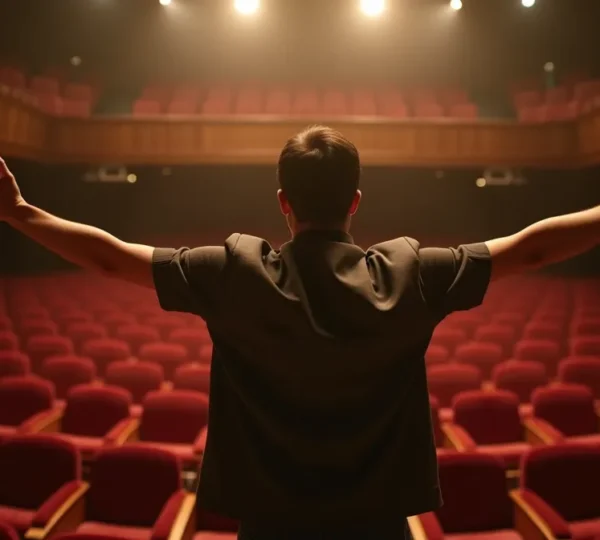
How Performing Arts Training Improves Public Speaking Skills for Introverts?
Public speaking for introverts isn’t about faking confidence; it’s about using an actor’s physical techniques to genuinely change how you feel and project authority. Specific breathing and posture exercises can…
Read more