
Slashing your household carbon footprint by 40% is less about sacrifice and more about making strategic, high-leverage decisions.
- Your daily diet’s carbon impact often outweighs your car’s, but not for the reason you might think.
- Energy-efficient appliances can paradoxically increase consumption without the right behavioral habits.
Recommendation: Start by accurately measuring your current footprint; it’s the only way to identify your biggest and easiest wins to tackle first.
As an eco-conscious family, you’ve likely mastered the fundamentals. You diligently sort your recycling, you’ve switched to reusable bags, and you turn off lights when leaving a room. Yet, there’s a nagging feeling that you’ve hit a plateau. You want to make a bigger, more meaningful dent in your carbon footprint, but the path forward seems confusing, filled with conflicting advice and overwhelming choices. Should you go vegan? Buy an electric car? Install solar panels? The sheer scale of it all can lead to paralysis.
Most advice focuses on a scattered list of small actions, but this approach often misses the forest for the trees. The common wisdom tells you to focus on “food miles” or to simply buy “green” products. But what if the true key to a massive 40% reduction isn’t about doing *more* things, but about understanding the hidden mechanics of your household’s impact? What if it’s about focusing on a few, high-leverage areas where your choices have a disproportionate effect?
This guide is designed to be your practical coaching manual. We’re going to move beyond the basics and challenge some long-held environmental assumptions. We’ll explore the principles of carbon leverage, system sequencing, and the counter-intuitive “efficiency paradox” that can sabotage your best efforts. By the end, you’ll have a clear, prioritized roadmap to make strategic changes that deliver the most significant carbon reduction for your family, without the guesswork.
This article breaks down the most impactful areas of your household footprint, providing a clear and actionable strategy. The following sections will guide you through the key levers for change, from your kitchen to your commute.
Summary: A Practical Guide to Cutting Your Family’s Carbon Footprint by 40% in One Year
- Why imported food accounts for a larger chunk of your footprint than your car?
- How to calculate your personal carbon footprint accurately in under 15 minutes?
- Vegan diet vs. Flight reduction: which change has the biggest immediate impact?
- The “efficiency error” that leads to consuming more energy after buying eco-appliances
- Sequencing your home retrofits: insulation before heat pump for maximum carbon drop
- Programmable thermostats: setting the perfect pre-heating curve to save money
- Why 80% of your money leaves the local economy when you stay at an all-inclusive resort?
- Electric vs. Hybrid: Which Eco-Friendly Mobility Option Suits a 50km Commute?
Why imported food accounts for a larger chunk of your footprint than your car?
It’s a common belief that the distance your food travels (“food miles”) is the main culprit in its carbon footprint. We picture cargo ships and planes burning fuel to bring us avocados from Mexico or lamb from New Zealand. While transport does have an impact, it’s surprisingly small compared to another, more significant factor: production. The real story isn’t about *where* your food comes from, but *what* your food is.
Research from the University of Michigan’s Center for Sustainable Systems provides a stunning insight: food production accounts for 68% of food emissions, while transport only accounts for 5%. This means the agricultural processes—from fertilizer use to methane emissions from livestock—are the dominant drivers of your dietary footprint. For many households, food represents between 10-30% of their total carbon footprint. This is often a larger share than their personal vehicle use, especially for those with modest commutes.
This concept of a product’s full lifecycle emissions is known as embodied carbon. For food, this includes everything from growing and harvesting to processing and packaging. Ruminant animals like cattle and sheep are particularly emission-intensive, producing significant amounts of methane, a potent greenhouse gas. Therefore, a locally-sourced steak can easily have a much larger carbon footprint than vegetables shipped from across the continent. This shifts the focus from obsessing over food miles to making strategic choices about the types of food we put on our plates. Furthermore, with data showing that up to 40% of food gets wasted in the U.S., the embodied carbon of everything we throw away is also a major, often-ignored, part of the problem.
How to calculate your personal carbon footprint accurately in under 15 minutes?
You can’t effectively reduce what you don’t measure. Before embarking on a carbon reduction journey, it’s essential to establish a baseline. This might sound like a complex, data-intensive task, but you can get a surprisingly accurate estimate in under 15 minutes by focusing on the biggest drivers of your household’s emissions. Forget counting every lightbulb; we’re targeting the heavy hitters.
The goal is to get a “snapshot” of your annual carbon output. The average U.S. household, for instance, has a footprint of around 48 tonnes of CO₂ equivalent per year. Knowing where your family stands in relation to this average is a powerful motivator and helps you identify your unique high-impact areas. Is your footprint dominated by electricity use, long-distance travel, or your diet? Answering this question is the first step in creating a targeted, effective plan.
To get started, gather a few key pieces of information. Most of this data can be found on recent utility bills or by making a quick, honest estimate. Having these numbers ready will make using an online carbon footprint calculator fast and easy. Here are the essential data points you’ll need:
- Annual electricity consumption: Find the total kilowatt-hours (kWh) used in the last 12 months from your electricity bill.
- Home heating fuel: Note your annual consumption of natural gas (in therms or cubic feet), heating oil, or propane from your utility bills.
- Vehicle fuel consumption: Estimate the total gallons or liters of gasoline or diesel your family’s cars use annually. You can calculate this from your average weekly spending on fuel.
- Air travel: List the number of round-trip flights each family member has taken in the past year, categorized by short-haul (under 3 hours) and long-haul (over 3 hours).
- Dietary habits: Be ready to estimate your family’s weekly consumption of red meat, poultry, fish, and dairy.
With these five data sets, you can use a reputable online tool (like the ones from the EPA or The Nature Conservancy) to generate a detailed breakdown of your footprint. This initial measurement is your starting line for a 40% reduction.
Vegan diet vs. Flight reduction: which change has the biggest immediate impact?
This is one of the biggest dilemmas for the climate-conscious individual. Both eating a plant-based diet and avoiding air travel are known as high-impact actions, but they function very differently. Understanding this difference is key to making strategic choices that align with your lifestyle and goals. One represents a significant, one-time saving, while the other offers a smaller, but relentlessly cumulative, daily benefit.
Let’s look at the numbers. Foregoing a single round-trip transatlantic flight can save a massive amount of carbon in one go. On the other hand, switching from a high-meat diet to a vegan one saves a smaller amount each day, but this adds up significantly over the course of a year. The question of which has a “bigger” impact depends on your time frame and lifestyle. Are you a frequent flyer or a daily meat-eater? The answer will be different for everyone.

The following comparison table, based on data from Columbia University, helps illustrate the scale of these actions. It’s important to note that these are estimates and can vary, but they provide a clear sense of magnitude. For many people, eliminating just one long-haul flight has a greater immediate annual impact than going fully vegan for that same year.
| Action | Annual CO₂ Reduction | Impact Type |
|---|---|---|
| Eliminating meat & dairy | 2,920 lbs/year | Cumulative daily |
| One round-trip US flight avoided | 4,000 lbs | One-time immediate |
| Switching to hybrid car | ~5,000 lbs/year | Ongoing reduction |
Ultimately, the most effective strategy may not be an “either/or” choice. For a family seeking a 40% reduction, a combination of both is likely necessary. This could mean adopting a “flexitarian” diet (drastically reducing red meat intake) while also committing to replacing one flight-based vacation with a local travel alternative. It’s about finding the carbon leverage points that are most feasible for your family.
The “efficiency error” that leads to consuming more energy after buying eco-appliances
Investing in a new, energy-efficient refrigerator or washing machine feels like a clear win for the environment. You’ve chosen the model with the best energy rating and anticipate lower electricity bills and a smaller carbon footprint. However, a curious psychological phenomenon known as the “rebound effect” or the “efficiency paradox” can quietly undermine these gains. This is the tendency for people to use an efficient appliance more often, simply because they perceive it as cheaper or “greener” to run.
Think about it: now that your new dishwasher uses less water and energy, you might be tempted to run it when it’s only half full. Or, with an efficient new air conditioner, you might set the thermostat a degree cooler than you used to. Research on household energy use has shown that this behavioral shift is very real. On average, the rebound effect can negate anywhere from 10-30% of the potential energy savings from an efficiency upgrade. You’ve made a smart purchase, but your habits have adjusted, eating away at the benefits.
The key to overcoming this “efficiency error” is not to avoid new appliances, but to pair technology with mindful behavior. The goal is to consciously maintain or even reduce your usage patterns after an upgrade. By decoupling the efficiency of the machine from the frequency of its use, you can capture the full carbon-saving potential of your investment. This requires a shift from a passive “set it and forget it” mentality to an active energy management approach within the home.
Your Action Plan: Maximize Efficiency Gains
- Set Consumption Alerts: Use smart plugs or your utility’s app to track real-time energy use and get notified if you exceed a daily or weekly target.
- Reinvest the Savings: Calculate the monetary savings from your new appliance and consciously allocate that money to another carbon-reduction measure, like a donation to a conservation project or saving for attic insulation.
- Establish a Carbon Budget: Work with your family to set a monthly “energy budget” in kWh. Track your progress and celebrate when you stay under budget.
- Gamify Your Usage: Use energy monitoring apps to create a friendly competition to see if you can stay below last year’s consumption levels for the same month.
- Schedule Annual Audits: Make it a yearly habit to review your bills and walk through your home to identify new opportunities for efficiency, reinforcing a mindset of continuous improvement.
Sequencing your home retrofits: insulation before heat pump for maximum carbon drop
When it comes to major home upgrades, the order in which you do things matters—a lot. This is the principle of system sequencing. Many homeowners, eager to decarbonize their heating, jump straight to installing a high-tech heat pump. While heat pumps are incredibly efficient, installing one in a poorly sealed and insulated home is like pouring water into a leaky bucket. You’ll be forcing your new, expensive system to work much harder than necessary to maintain a comfortable temperature, eroding your potential savings and carbon reduction.
The most effective and cost-efficient strategy is to “seal the envelope” first. This means prioritizing improvements that prevent heat from escaping your home in the first place. Think of your house as a system: first, you plug the leaks (insulation and air sealing), and only then do you install a more efficient engine (the heat pump). A well-insulated home requires a smaller, less expensive heat pump, which will run less often and last longer. The UN highlights that home energy efficiency improvements can achieve a reduction of up to 900 kg of CO2e per year, a substantial chunk of your goal.
Starting with a professional home energy assessment is the best first step. An auditor can use tools like blower doors and infrared cameras to pinpoint exactly where your home is losing the most heat. This allows you to target your investments with surgical precision, getting the biggest bang for your buck. The optimal sequence of retrofits generally follows a clear logic:
- Step 1: Get an Energy Assessment. Identify your home’s specific weaknesses before spending any money.
- Step 2: Insulate the Attic. Since heat rises, this is often the most cost-effective upgrade you can make.
- Step 3: Seal Air Leaks. Use weatherstripping and caulk to seal gaps around windows, doors, and electrical outlets.
- Step 4: Upgrade Windows. If your budget allows, replace old, single-pane windows with modern double or triple-glazed units.
- Step 5: Install the Right-Sized Heat Pump. Only after the envelope is tight should you select a heat pump, which can now be correctly sized for your home’s reduced heating load.
This sequential approach ensures that each dollar you spend maximizes your carbon reduction. It’s a strategic, long-term plan, not a quick fix.
Programmable thermostats: setting the perfect pre-heating curve to save money
The programmable thermostat is one of the most powerful and often underutilized tools in a home’s energy-saving arsenal. Many people set a simple schedule—cooler when they’re away or asleep, warmer when they’re home—and think the job is done. But to truly maximize savings, you need to think like an engineer and consider your home’s unique “thermal mass.” This refers to the ability of your home’s structure (walls, floors) to absorb and store heat.
Setting the perfect “pre-heating curve” means programming your thermostat to start warming the house just in time for you to need it, without overshooting the target. A home with high thermal mass (like one with concrete floors) holds heat longer and can start its warm-up cycle later. A lighter-frame home loses heat faster and needs to start earlier. Smart thermostats are brilliant at this, learning your home’s thermal properties over time to optimize the heating schedule automatically. They can also integrate with weather forecasts, holding off on heating if a sunny afternoon is predicted.

The core principle is to avoid unnecessary energy use by working *with* your home’s natural tendencies. A Swiss study on commercial buildings demonstrated that adjusting thermostat settings based on conditions can have a massive impact. While the context is different, the principle is universal: intelligent, responsive temperature control prevents waste. Instead of blasting the heat to recover from a low temperature, a gentle, optimized pre-heating curve provides consistent comfort with minimum energy expenditure.
For your family, this means setting your “wake up” temperature to be reached *at* the time you wake up, not an hour before. It means allowing the temperature to drop a few degrees before you leave for the day, knowing the residual heat will keep it comfortable until you’re out the door. These small, automated adjustments add up to significant savings and carbon reductions over a heating season, all while maintaining perfect comfort.
Why 80% of your money leaves the local economy when you stay at an all-inclusive resort?
When planning a family vacation, the carbon footprint of your flight is often top of mind. But there’s another, more subtle impact to consider: where your money goes. The choice of accommodation can have a profound effect not just on the local environment, but on the local economy. This phenomenon is known as economic leakage, and it’s especially prevalent in large, foreign-owned, all-inclusive resorts.
When you stay at such a resort, a huge portion of the money you spend doesn’t stay in the host country. It “leaks” back out to pay for imported goods (food and drinks for the buffet), foreign management, and profits sent to overseas corporate headquarters. According to studies on the tourism industry, this leakage can be staggering, with some estimates suggesting as much as 80% of the money leaves the local community. This prevents the local population from benefiting fully from tourism and can create an unsustainable economic model that is dependent on foreign supply chains.
Choosing to support locally-owned hotels, guesthouses, and restaurants is a powerful act of sustainable tourism. It ensures your travel dollars are circulated within the community, fostering local entrepreneurship and reducing the need for long-distance supply chains. A local hotel is more likely to source its food from local farmers, hire local staff at all levels, and use local artisans for its decor. This not only strengthens the local economy but also reduces the hidden “embodied carbon” of your vacation. It’s a choice that enriches your travel experience, allowing for more authentic cultural interactions while directly supporting the people and places you’ve come to visit.
To make more sustainable travel choices, a “local-first” mindset is key. Here’s a simple checklist to guide your planning:
- Research and book accommodations that are clearly advertised as locally owned and operated.
- Dine at independent restaurants that highlight local ingredients and cuisine.
- Book tours directly with local guides or small, local companies rather than through international booking platforms.
- Shop for souvenirs at local markets and artisan cooperatives instead of hotel gift shops.
- Look for businesses that are part of a local business association or have sustainability certifications.
Key Takeaways
- Focus on high-leverage areas like diet, major retrofits, and travel choices, where small changes yield large results.
- Always measure your footprint first to create a targeted and effective reduction plan.
- Understand and counteract the “rebound effect” by pairing efficient technology with mindful behavior.
Electric vs. Hybrid: Which Eco-Friendly Mobility Option Suits a 50km Commute?
Choosing a new family car is a major decision with long-term carbon implications. For a typical daily commute of around 50km, both electric vehicles (EVs) and hybrids offer a significant improvement over a conventional gasoline car. However, they have different strengths and weaknesses, particularly when considering their entire lifecycle, from manufacturing to daily use.
An EV has higher “embodied carbon” due to the energy-intensive process of manufacturing its battery. This means it starts its life with a larger carbon debt than a hybrid. However, its daily operation can be near-zero emissions, especially if your home electricity is sourced from renewables. A hybrid car has a smaller manufacturing footprint but continues to burn fossil fuels on a daily basis, albeit very efficiently. The “break-even point” is the time it takes for an EV’s operational savings to overcome its higher manufacturing emissions. For a 50km daily commute, this is typically around 2-3 years.
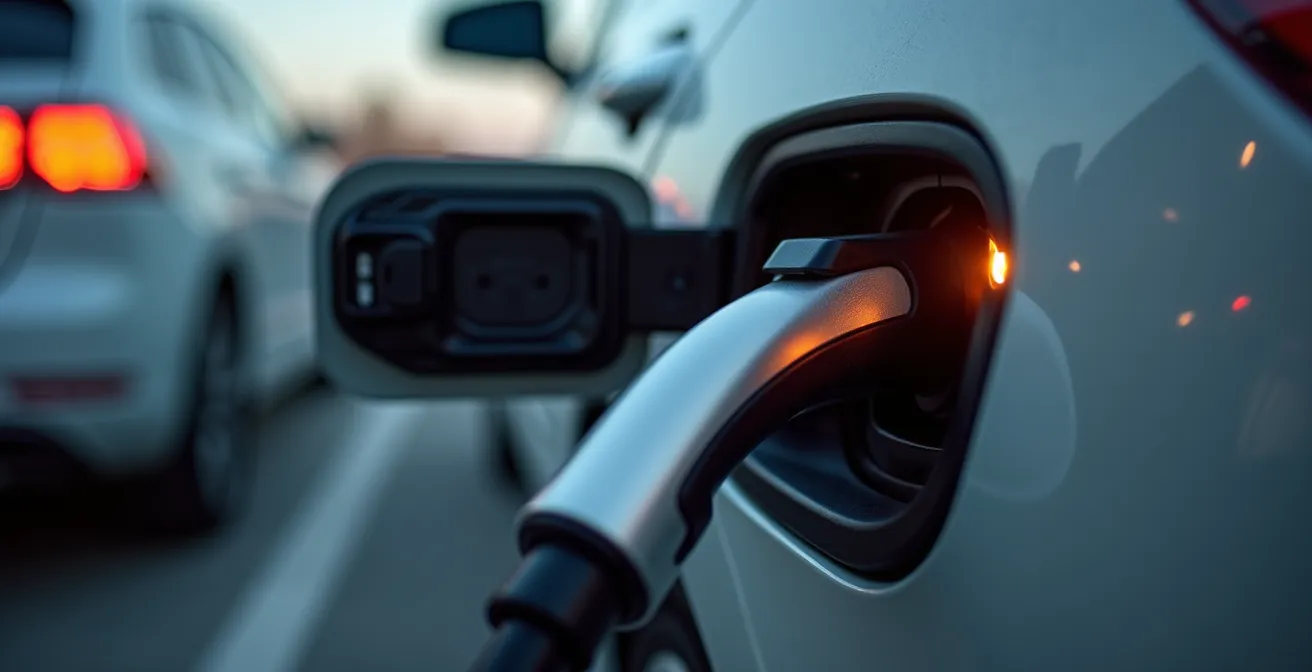
For a family with a predictable, 50km daily commute, an EV is almost certainly the superior long-term choice for minimizing carbon. This commuting distance is well within the range of any modern EV, meaning “range anxiety” is not a factor for daily use. Home charging overnight is convenient and ensures you start every day with a “full tank.” A hybrid might be a better fit for a family that frequently takes long, spontaneous road trips to areas with limited charging infrastructure, but for routine travel, the EV is the clear winner.
This comparative analysis highlights the key factors to consider for this specific use case.
| Factor | Electric Vehicle | Hybrid |
|---|---|---|
| Manufacturing emissions | Higher initially | Moderate |
| Daily operation (50km) | Near-zero with renewable grid | 2-3L fuel/day |
| Break-even point | 3 years typical | Immediate lower emissions vs conventional |
| Battery degradation | Range loss over time | Both systems degrade |
The decision ultimately rests on your family’s specific driving patterns. But for the common scenario of a consistent daily commute, the path to the lowest possible carbon footprint leads directly to a fully electric vehicle, especially when paired with a renewable energy plan for your home.
By focusing on these strategic, high-leverage areas—understanding your food’s true impact, measuring your baseline, sequencing your home upgrades, and making conscious choices in travel—you can move beyond the basics and achieve a truly significant reduction in your family’s carbon footprint. The goal of 40% is ambitious, but it is achievable with a smart, focused, and informed strategy.